How To Reduce Gut Inflammation Naturally (15 Ways)
Gut inflammation can affect more than just your digestion, which is why knowing how to reduce it - and prevent it - matters.
This post contains affiliate links. This means I may earn a small commission when you purchase through my link, at no additional cost to you. You can read my full disclosure policy here.
Gut inflammation can be tricky. I see a lot of information out there that is sort of a catch-all for gut healing.
But my experience shows that these solutions are often not so simple. You need to take the solutions and reconfigure them to your specific needs.
For instance, you may not be processing the foods that provide the gut with nutrients that your body desperately needs. Therefore, eating them may be causing you more problems than you know.
My family struggled with this for years. We still need to adjust things as the healing occurs. So don't just take the advice and run with it. Slowly test and adjust to fit your body's needs.
Chronic Inflammation
Inflammation occurs for many reasons. And not all reasons are bad. However, the type of inflammation we are referring to here is chronic inflammation.
The inflammatory process is necessary for healing. As the body repairs itself, you may experience certain inflammatory responses, such as warmth in the injured area or pain that protects it from movement. This immune response is normal.
But low-grade inflammation, which occurs when the body is under some type of constant stress, is not normal.
This chronic, or long-term, inflammation makes you susceptible to chronic diseases. You may also experience things like irritable bowel syndrome, Crohn's disease or other digestive tract issues.
But luckily, your body has natural healing systems put in place. Properly supporting those systems will promote better gut health.
The Importance of Gut Microbiota
Gut microbiota are a bunch of tiny organisms that live in the gut. Some organisms include fungi, bacteria, and viruses.
Each broad type of organism is broken down further into species. For instance, there are an estimated over 35,000 species of bacteria found in the gut.
Role of Gut Microbiota:
- Helps regulate the immune system
- Maintains a strong intestinal barrier
- Protects against pathogens and foreign invaders
- Break down food
- Aids in metabolic functions
- Participates in vitamin production
- Helps in vitamin and nutrient conversions
It is important to recognize that germs can strengthen the immune system and keep a healthy, balanced microbiome.
There needs to be a healthy balance in protecting yourself from germs. Over-sanitizing with the wrong chemicals will kill the good bacteria along with the bad.
I am not suggesting you be unclean or expose yourself to unnecessary dangerous pathogens. But attempting to avoid every germ at the cost of compromising your gut health can cause long-term health effects that may be more devastating than you realize.
Things that affect gut microbiome
- Chronic Stress
- Geography
- Lifestyle
- Foods you eat
- Exposure to germs and their types
- Oversanitation
- The use of "toxic" chemicals vs natural methods
- The seasonal changes
- Other environmental factors
- Infant feeding
- Diet
- Antibiotic exposure
- Age
Antibiotics and gut health
Antibiotics kill bacteria. Yes. But they kill the bad with the good. Therefore, antibiotics have their place, but the overuse of this medication may do more harm than good.
In my experience, medical doctors are quick to give antibiotics as a general overall treatment for many things. Often I was told to give my children antibiotics as a precautionary measure.
Research shows the following to be possible from the overuse of antibiotics:
- Antibiotic-resistant bacterial strains can prevail
- Microbial biodiversity in the gut diminishes
- Increased risk of obesity
- Increased risk of allergies
Antibiotics should be used with caution because you need bacteria in the gut known as "good bacteria". Good gut flora (a.k.a. good bacteria) plays an important role in an individual's health that should not be taken lightly.
Good gut bacteria keep you healthy by doing the following:
- Aiding in the breakdown of nutrients used by your body
- Influencing how the body responds to infections and decreasing the chances of autoimmune diseases
- Preserving the gut lining and keeping it strong. This helps keep foreign invaders out, preventing food particles from leaking into the bloodstream and causing inflammation.
- Decreases the chances of neuroinflammation
- Aiding in the proper functioning of neurotransmitters. This can play a critical role in anxiety, depression, and mental health.
How To Reduce gut inflammation naturally
What & How You Eat Matters
Eat anti-Inflammatory Food
Anti-inflammatory foods is a trickier area to navigate than many may think. This is because many foods out there have anti-inflammatory properties, but that does not mean that your body will necessarily perceive them as anti-inflammatory.
This is because each person's unique makeup and health story (what I call their understory, as stated in my brand name) dictates which foods their body will use to help reduce inflammation.
Yes, spinach has a plethora of health benefits. However, it also has red flags for people with chronic health conditions.
Therefore, to reduce inflammation, you want to choose foods that fit your needs and won't trigger an inflammatory reaction in your body.
This can make a huge difference in your gut inflammation. And the great thing about it is that it is done naturally, without the addition of extra things to buy.
Choosing an anti-inflammatory diet can be beneficial to some. But it really depends on the standards of that diet. Ask yourself first- does it contain foods that can still potentially trigger intestinal inflammation?
Slow-Cooked Foods
Slow-cooked foods can be beneficial to many people with chronic inflammation. This is because slow cooking the food breaks some of the food down for you before you even eat it.
Therefore, when it comes time to eat it, your digestive system will have an easier time. This is because your digestive system has to exert less energy.
Also, nutrients will then be better absorbed. Although some could argue that fewer nutrients are available when food is slow-cooked, nutrients are only beneficial if the person is able to absorb them.
Although Slow-cooked foods can be very beneficial to a struggling digestive system, histamine needs to be considered as well.
Histamine counts can be higher in slow-cooked meals. Monitoring your intake of foods can still make slow-cooked foods a great contender when trying to tame inflammatory responses.
Smaller Meal Portions
Eating smaller portions of food at a time is a must for many struggling with poor gut health. Your digestive tract can more easily process food because there is less to process.
Additionally, this will help those who suffer from IBS (irritable bowel syndrome, ulcerative colitis, or other chronic diseases. More nutrients will be gotten from the food ingested, and fewer particles are likely to seep into the bloodstream, causing inflammation.
Stop eating problematic foods
Problematic foods can vary among people. However, those who frequently experience inflammatory responses usually have factors in common when it comes to problematic foods.
These may include the following: Dairy, Gluten, Corn, Soy, Certain oils, Histamines, Sulfates, Oxalates, Highly Processed foods, Sugar, Fermented foods, and so on.
Some of these foods are more difficult on the stomach than others. This does not mean everyone needs to be gluten-free or dairy-free.
But it does mean you need to be aware of triggers. If these are giving you a problem, ask yourself why. Be aware of what and how much triggers your symtpoms.
breathe while you eat
Yes, something as simple as relaxing and breathing while you eat can help your gut microbiome. Your body will function better. And if you are also eating at a slower pace, you are further supporting your digestive system, creating better digestive flow.
Give time for digestion between meals
Adequate time between meals allows the body to fully break down food and get it to where it needs to go. Bombarding it with more food too quickly can interrupt the process.
You want to absorb as many nutrients as possible from your food, not overwhelm your body triggering a stress response.
Spacing meals out appropriately can greatly help with this.
Juicing
I am personally a big fan of juicing. It has done wonders for me, and my body responds very well to it.
This can fluctuate for some, but many who suffer from gut inflammation or intestinal permeability may find juicing beneficial.
Much of the soluble fiber is removed from juicing, leaving insoluble fiber behind. This makes the digestive system better able to absorb nutrients without interference from hard-to-digest materials.
Also, the nutrients are more directly provided to the body. Many of us who have acute or intestinal inflammation know how difficult it can be to feel like our bodies are getting enough vitamins and minerals.
Juicing is something to consider adding to your routine if you are looking to improve gut inflammation.
Beat Inflammation Naturally
You will get these juicing recipes sent directly to your inbox when you sign up for UnderStory's newsletters.
Enzymes
Enzymes are secreted by the stomach to break down food. But people who experience inflammation in the gut often have problems with their digestive health too.
Therefore, enzyme production can be affected, making fewer enzymes available for breaking down food. They play a critical role in an individual's ability to properly absorb nutrients. Some other functions of the enzymatic processes include: regulating and metabolizing microbials, providing digestive support, and immune system regulation.
In addition to this, there are different types of enzymes responsible for breaking down different substances. For instance, one type called carbohydrate-active enzymes targets carbohydrates, and another type called lipases targets fats.
Knowing which types of foods are most problematic for you can help you identify which enzymes you may be lacking.
There are enzymes available for supplementation. I will link to a reputable brand that we use here.
Probiotics
Similar to the issues that can occur with enzymes, people can lack enough good bacteria. This can be due to chronic inflammation and chronic health challenges.
Probiotics are live microorganisms, including bacteria and fungi such as yeasts.
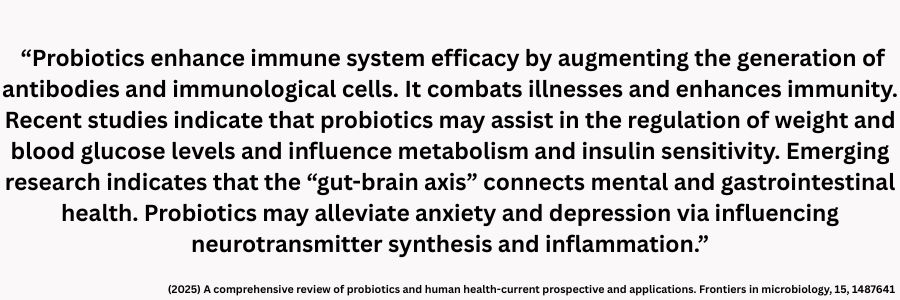
These microorganisms are important for balancing the microbiome's ecosystem. The quote taken from the journal Frontiers in Microbiology explains some of the ways probiotics are important.
Use Better Oils
There is mixed research on the effects that seed oils have on the gut. I know that certain oils will consistently cause inflammation and bloating if I eat them.
A lot of this has to do with how the oils eaten were processed and how the plant the oil came from was raised.
I have difficulty with the information indicating seed oils as being beneficial. This information is often stated without giving clarity to how the oils are consumed and the plant's background.
For instance, corn and soy raised with pesticides will carry over into the oil that is extracted from that plant.
Also, studies conducted need to take into account the many factors besides just whether a seed oil has certain properties or not. The same basis needs to be applied to any item consumed.
A person who has gut inflammation is compromised. Therefore, the individual's tolerance level will shift. You need to keep this in mind when deciding which oils to cook with.
I use olive oil and grapeseed oil regularly. Avocado oil is great, but avocados are high in histamine and can cause inflammation for some, although studies show avocados as having anti-inflammatory benefits.
Everything you consume and supplement with needs to be taken into account differently when dealing with chronic gut conditions.
Herbals
Herbals are a natural and effective way to support inflammation and the digestive system. Many herbals are used to support inflammatory conditions successfully. One widely known for its inflammatory properties is turmeric. Others include ginger, licorice root, chamomile, and slippery elm to name just a few.
Keep a food journal
Another great asset in helping to reduce gut inflammation is a food journal. Although this is an indirect way to help reduce inflammation, it is very beneficial none-the-less.
The invaluable benefits of keeping a food or health journal include being able to better assess which foods are triggering gut inflammation, the times of day that are most problematic for your digestive system, patterns that increase your chances of inflammatory symptoms, and reduced stress on your system so you are not relying on memory alone.
Journals can be as simple or as complex as you would like. However, looking back over days, weeks, or months at a time can allow you to notice things that may have easily been overlooked.
This is especially the case since symptoms from foods, supplements, and conditions can take up to 3 days to appear.
Exercise
Exercise is another beneifical way to reduce gut inflammation. There are many forms of exercise, and finding one specific for your body's needs can provide gut healing benefits.
I have already done a post on this that I will link here - 8 Exercises For The Gut.
Sleep
The next important step to support gut health is sleep. Sleep has been linked to many health benefits. Your body repairs and renews during the sleep process, therefore, getting quality sleep is important.
I have a free source that goes over the adjustments to make for better sleep hygiene. This will set your body and environment up to receive better sleep to support digestion and inflammation.
Poor sleep has been linked to pro-inflammatory cytokines (chemical messengers that play a role in regulating inflammation). Upset of the gut microbiome can also cause problems with sleep.
This can become a cycle with many people with chronic gut issues. It is important to begin regulating sleep regularly to help reduce inflammation.
Manage Stress
Lastly, studies show that stress alters the brain-gut connection. This has been linked to inflammatory bowel disease, worsening gut motility, changes in gut secretions for processing food, negative impacts on gut flora, intestinal permeability, and more.
These all can lead to symptoms of increased anxiety, lower energy levels, problems in mood regulation, bloating, and so on.
Therefore, getting control over this domino effect is important. Start by becoming aware of your stress triggers and the symptoms you begin to develop.
This post gave all the best research-backed, natural ways to reduce and manage gut inflammation for better digestive heatlh.
- Jandhyala, S. M., Talukdar, R., Subramanyam, C., Vuyyuru, H., Sasikala, M., & Nageshwar Reddy, D. (2015). Role of the normal gut microbiota. World journal of gastroenterology, 21(29), 8787–8803. https://doi.org/10.3748/wjg.v21.i29.8787
- Rahul Harikumar Lathakumari, Leela Kakithakara Vajravelu, Abhishek Satheesan, Sujith Ravi, Jayaprakash Thulukanam,
Antibiotics and the gut microbiome: Understanding the impact on human health, Medicine in Microecology, Volume 20, 2024, 100106, ISSN 2590-0978, https://doi.org/10.1016/j.medmic.2024.100106. - Rinninella, E., Raoul, P., Cintoni, M., Franceschi, F., Miggiano, G. A. D., Gasbarrini, A., & Mele, M. C. (2019). What is the Healthy Gut Microbiota Composition? A Changing Ecosystem across Age, Environment, Diet, and Diseases. Microorganisms, 7(1), 14. https://doi.org/10.3390/microorganisms7010014
- Yu, X., Pu, H., & Voss, M. (2024). Overview of anti-inflammatory diets and their promising effects on non-communicable diseases. The British journal of nutrition, 132(7), 898–918. https://doi.org/10.1017/S0007114524001405
- Konturek PC, Brzozowski T, Konturek SJ. Stress and the gut: pathophysiology, clinical consequences, diagnostic approach and treatment options. J Physiol Pharmacol. 2011 Dec;62(6):591-9. PMID: 22314561.
- Jiang, Z., Mei, L., Li, Y., Guo, Y., Yang, B., Huang, Z., & Li, Y. (2024). Enzymatic Regulation of the Gut Microbiota: Mechanisms and Implications for Host Health. Biomolecules, 14(12), 1638. https://doi.org/10.3390/biom14121638
- Hemarajata, P., & Versalovic, J. (2013). Effects of probiotics on gut microbiota: mechanisms of intestinal immunomodulation and neuromodulation. Therapeutic advances in gastroenterology, 6(1), 39–51. https://doi.org/10.1177/1756283X12459294
- Sarita, B., Samadhan, D., Hassan, M. Z., & Kovaleva, E. G. (2025). A comprehensive review of probiotics and human health-current prospective and applications. Frontiers in microbiology, 15, 1487641. https://doi.org/10.3389/fmicb.2024.1487641
- Ghasemian, M., Owlia, S., & Owlia, M. B. (2016). Review of Anti-Inflammatory Herbal Medicines. Advances in pharmacological sciences, 2016, 9130979. https://doi.org/10.1155/2016/9130979
- Khanijow, V., Prakash, P., Emsellem, H. A., Borum, M. L., & Doman, D. B. (2015). Sleep Dysfunction and Gastrointestinal Diseases. Gastroenterology & hepatology, 11(12), 817–825.
- Lin, Z., Jiang, T., Chen, M., Ji, X., & Wang, Y. (2024). Gut microbiota and sleep: Interaction mechanisms and therapeutic prospects. Open life sciences, 19(1), 20220910. https://doi.org/10.1515/biol-2022-0910
More Posts To Enjoy
Inflammation indicates to the body that healing is needed in that area, which is helpful. However, left unchecked, many problems arise. These anti-inflammatory supplements can greatly assist in keeping inflammation in check. This post contains
What is gut-muscle talk and why will it benefit you? Which exercises for the gut work? The answers to these important questions are connected to a healthier you. This post contains affiliate links. This means
Struggling with histamine intolerance? Finding the right supplements can make all the difference. The following list highlights the top supplements for histamine intolerance proven to calm reactions and support balance, helping you to take back
Your body feeling sluggish? Supporting the lymphatic system with herbs is a powerful way to help your body begin the journey to feeling better. There are certain herbs that are great for lymphatic flow which
Bloating, gassy, crampy, or irritated often? Sick of looking like you are pregnant when you are not? This list will show you the best herbal tea for gut health. A better functioning digestion system will
These 3 juicing recipes consist of a variety of vegetables that all will help your body get to its best state. The recipes below use low-histamine triggering ingredients that will power your body, reduce inflammation,
Last Updated on 3 weeks ago by Amy
